EmpowerK12

DC test results

What DC's state assessments (PARCC, then CAPE) show each year, for every student group.

9 posts

DC test results · September 2026

DC students post fourth straight year of gains on 2026 CAPE

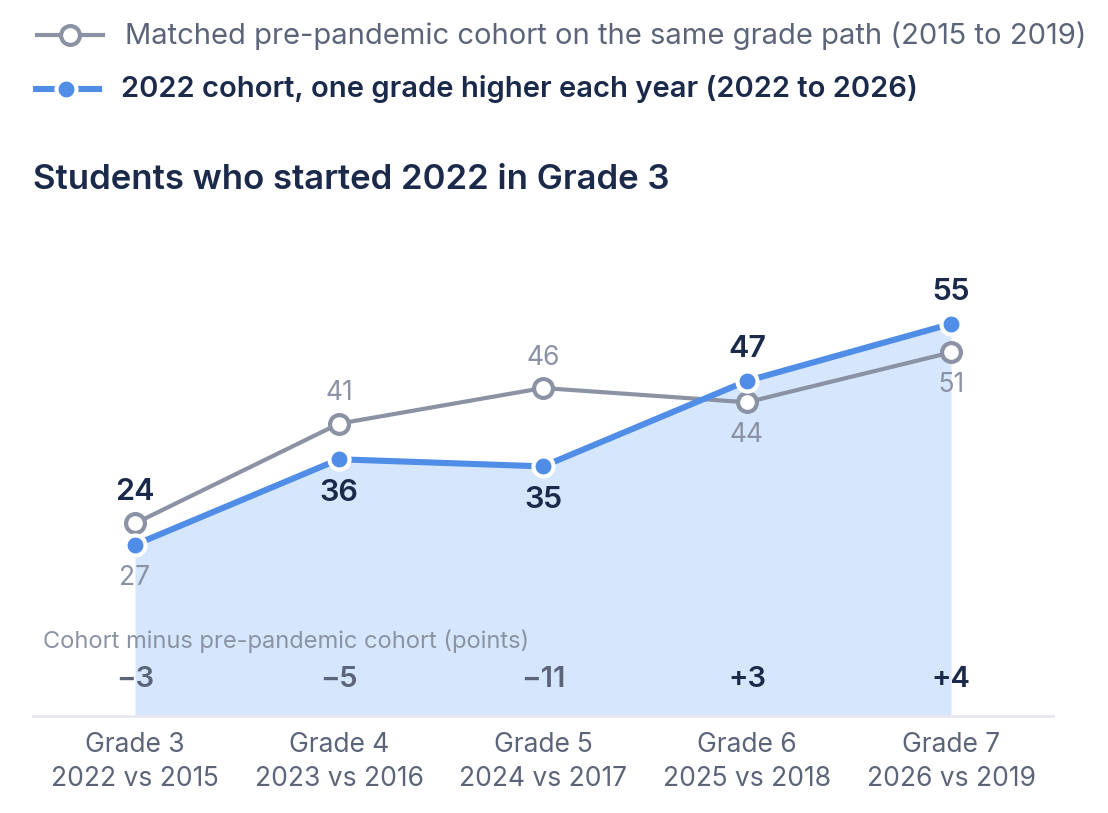
DC students improved on the 2026 CAPE state tests for the fourth year in a row. Gaps narrowed and fewer students scored at Level 1, but early grades still trail 2019 in math.

Josh Boots · 12 min read

DC test results · August 2024

DC student achievement nominally improves

Today, the DC Office of the State Superintendent of Education (OSSE) released results from the 2024 state assessment in math and English language arts (ELA) . While the test has a new name, CAPE, the structure and scoring of the assessment was very similar to the previous PARCC test.

Josh Boots · 6 min read

Priority students · January 2020

Are achievement gaps widening in DC?

You may have heard conflicting information of late about whether student achievement gaps in the District of Columbia are widening or narrowi ng . As with most conversations about school data, there is nuance to addressing the question, and the answers rarely come with complete certainty.

Josh Boots · 9 min read

Priority students · September 2019

A robust discussion of at-risk students and PARCC achievement

In this blog post, we examine the following key questions related to the academic achievement and improvement of DC's at-risk students: How has the correlation between school level proficiency and percent of at-risk students tested changed over time?

Josh Boots · 7 min read

DC test results · September 2019

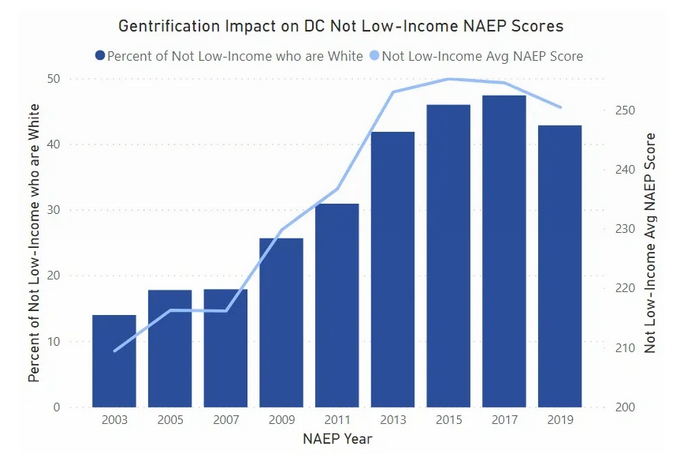
How much do demographic shifts account for DC PARCC gains?

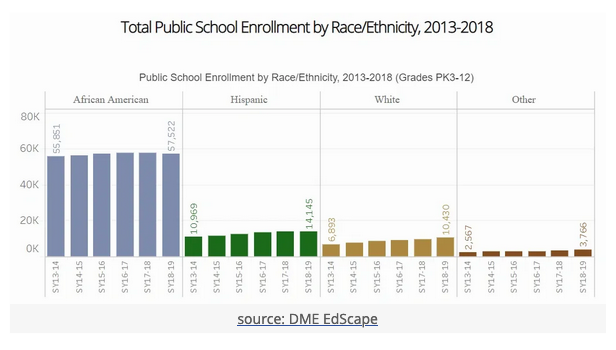
Over the last two decades, the District's demographic makeup has shifted in small and large ways, becoming more affluent with black/African American residents comprising a smaller share of the total population.

Josh Boots · 3 min read

Go deeper

Research and dashboards from EmpowerK12

Our reports and public dashboards hold the full data behind these posts, school by school and year by year.

Explore our research